
Yıldırım, Utku Mahir
Loading...

Profile URL
Name Variants
Yildirim, Utku Mahir
Yıldırım, Mahir Utku
Yıldırım, Mahir Utku
Job Title
Email Address
utku.mahir@ieu.edu.tr
Main Affiliation
09.02. Internal Sciences
Status
Current Staff
Website
ORCID ID
Scopus Author ID
Turkish CoHE Profile ID
Google Scholar ID
WoS Researcher ID
Sustainable Development Goals
 1
1NO POVERTY
0
Research Products
 2
2ZERO HUNGER
0
Research Products
 3
3GOOD HEALTH AND WELL-BEING
1
Research Products
 4
4QUALITY EDUCATION
0
Research Products
 5
5GENDER EQUALITY
0
Research Products
 6
6CLEAN WATER AND SANITATION
0
Research Products
 7
7AFFORDABLE AND CLEAN ENERGY
0
Research Products
 8
8DECENT WORK AND ECONOMIC GROWTH
0
Research Products
 9
9INDUSTRY, INNOVATION AND INFRASTRUCTURE
0
Research Products
 10
10REDUCED INEQUALITIES
0
Research Products
 11
11SUSTAINABLE CITIES AND COMMUNITIES
0
Research Products
 12
12RESPONSIBLE CONSUMPTION AND PRODUCTION
0
Research Products
 13
13CLIMATE ACTION
0
Research Products
 14
14LIFE BELOW WATER
0
Research Products
 15
15LIFE ON LAND
0
Research Products
 16
16PEACE, JUSTICE AND STRONG INSTITUTIONS
0
Research Products
 17
17PARTNERSHIPS FOR THE GOALS
0
Research Products

Documents
14
Citations
44
h-index
4

Documents
25
Citations
87

Scholarly Output
4
Articles
4
Views / Downloads
14/78
Supervised MSc Theses
0
Supervised PhD Theses
0
WoS Citation Count
0
Scopus Citation Count
0
Patents
0
Projects
0
WoS Citations per Publication
0.00
Scopus Citations per Publication
0.00
Open Access Source
4
Supervised Theses
0
| Journal | Count |
|---|---|
| Acta Medica Alanya | 1 |
| Frontiers in Oncology | 1 |
| Süleyman Demirel Üniversitesi Tıp Fakültesi Dergisi | 1 |
| The European Research Journal | 1 |
Current Page: 1 / 1
Scopus Quartile Distribution
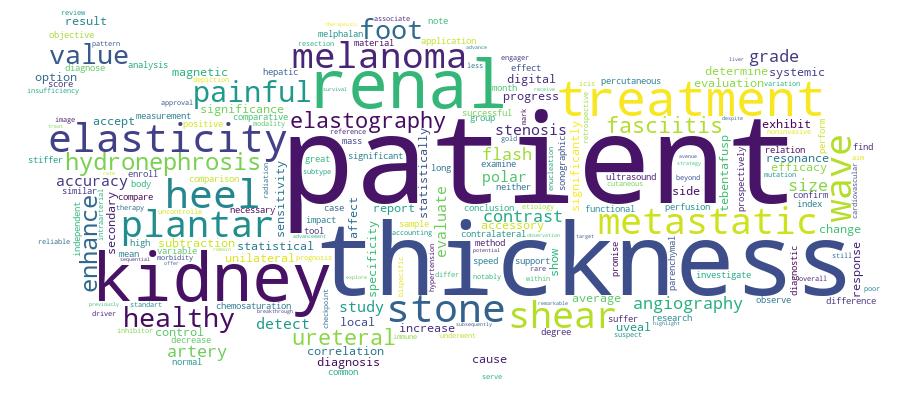
Competency Cloud
4 results
Scholarly Output Search Results
Now showing 1 - 4 of 4
Article Evaluation of the Elasticity and Thickness of the Heel Fat Pad With Ultrasound in Plantar Fasciitis(2022-09-30) Yıldırım, Mahir Utku; Biçen, Ahmet Çağdaş; Ünal, Abdullah Meriç; Yıldırım, Utku Mahir; Unal, MericObjective The aim of this study was to evaluate thickness and elasticity of heel fat pad in patients with unilateral plantar fasciitis and to investigate the effects of age, sex, body mass index (BMI), and functional scores on plantar fasciitis. Material and Method 70 patients who had been suffering from unilateral plantar fasciitis longer than 6 months were enrolled in the study. The thickness and elasticity of fat pad were compared between the painful and healthy feet of the patients with ultrasound. For measurement of elasticity, shear wave elastography (SWE) was used. Comparative analysis was performed for thickness and elasticity variables between the painful and healthy feet with Mann–Whitney U and independent samples t-test. Results Average of age of the patients was 44±11.66. The average thickness of the heel fat pad was 17.9±3.1 mm on the affected side and 18.3±3.3 mm on the healthy side. The mean SWE value of the painful side was 23.9 m/s (range 9.3-32) and was 24.7 m/s (range 10.8-34) on the healthy side. Heel fat pad thickness was greater in the healthy feet than in the painful feet, but there was no statistical significance (p=0.448). The painful feet were stiffer, but the difference was statistically similar (p=0.347). BMI had a statistically significant impact on thickness of heel fat pad. Conclusion The results showed that a decrease in the heel fat pad thickness was a supporting finding of plantar fasciitis in patients with normal BMI but not in patients with BMI>25.Article Successful Application of Chemosaturation With Percutaneous Hepatic Perfusion in Metastatic Uveal Melanoma Patient Progressing After Systemic Treatment Options: a Case Report(Frontiers media sa, 2024-04-10) Günenç, Damla; Özluk, Ahmet Anil; Yıldırım, Utku Mahir; Ascierto, Paolo A.; Karaca, BurcakUveal melanoma (UM) is a rare subtype of melanoma, accounting for less than 5% of all melanoma cases. Metastatic UM differs notably from cutaneous melanoma, exhibiting variations in etiology, prognosis, driver mutations, metastatic patterns, and poor responses to immune checkpoint inhibitors (ICI). Beyond local treatment options, such as resection, radiation therapy, and enucleation, and systemic treatments, such as ICIs, the approval of tebentafusp, a bispecific gp100 peptide-HLA-directed CD3 T-cell engager, marks a breakthrough in treating HLA-A*02:01 metastatic UM. Despite the advancements in treatment options, the long-term survival rates remain inadequate. We report a patient with metastatic UM who previously received ICI and progressed on tebentafusp treatment but subsequently exhibited a remarkable response to local treatment targeting liver metastasis. Such observations highlight the significance of exploring sequential therapeutic strategies for advanced UM, offering potential avenues to enhance treatment efficacy and patient prognosis.Article Diagnostic Accuracy of Kidney Shear Wave Elastography at the Diagnosis of Ureteral Stones(2022-03-27) Serter, Selim; Yıldırım, Mahir Utku; Ors, Bumin; Şahin, Erkan; Solak, Aynur; Selim, Serter; Yıldırım, Utku MahirAim: To determine the efficacy of kidney shear wave elastography (SWE) in patients diagnosed with ureteral stones Method: Both kidneys of 30 patients were evaluated prospectively with SWE. The ureteral stone size and the degree of hydronephrosis were determined by sonographic examination. The contralateral kidney was accepted as the control parameter. Stone size, grade of hydronephrosis and kidney shear wave speed changes were noted and their relations were examined for statistical significance. Results: Affected kidney group had significantly increased SWE values than the control group. (3.87+-1.22 vs 2.06+-0.72 m/sec) (p=0.01). Neither the stone size nor the kidney SWE values showed a correlation with the gender. There was a positive correlation between the grade of hydronephrosis and the stone size (p=0.047, r=0,36). Kidneys with grade 2 hydronephrosis had significantly higher SWE values than those with grade 1 hydronephrosis. Conclusion: SWE is a promising tool to observe the parenchymal elasticity changes in patients with hydronephrosis secondary to ureteral stones. Further studies are necessary to confirm the research results.Article Comparison of Contrast-Enhanced Magnetic Resonance Angiography and Digital Subtraction Angiography in the Evaluation of Renal Artery Stenosis and Detecting of Accessory and Polar Arteries(2021-09-03) Başaran, Ceyla; Yıldırım, Mahir Utku; Yıldırım, Utku MahirObjectives: Renal artery stenosis (RAS) is the most common cause of secondary hypertension. RAS may cause renal insufficiency, uncontrolled hypertension and is associated with increased cardiovascular morbidity and mortality. We aimed to evaluate the accuracy of contrast enhanced Flash 3D Renal Magnetic Resonance Angiography (MRA) in the depiction of the RAS also detecting of accessory and polar renal arteries with intraarterial digital subtraction angiography (DSA) still serving as the reference standard.Methods: In this retrospective case-control study, we reviewed contrast enhanced Flash 3D Renal MRA and DSA of 71 patients who were suspected of having RAS and underwent DSA after MRA within 15 days. DSA was accepted as gold standart and the specificity, sensitivity and accuracy of MRA were determined.Results: Overall sensitivity and specificity values of contrast enhanced Flash 3D Renal MRA in detecting stenosis were 96.1% and 76.3% respectively.Conclusions: Contrast enhanced Flash 3D Renal MRA is a reliable noninvasive imaging modality in the diagnosis of RAS.