
Atmaca, Hande
Loading...
Profile URL
Name Variants
Çetin, Hande Atmaca
Job Title
Email Address
hande.atmaca@ieu.edu.tr
Main Affiliation
06.04. Interior Architecture and Environmental Design
Status
Former Staff
Website
ORCID ID
Scopus Author ID
Turkish CoHE Profile ID
Google Scholar ID
WoS Researcher ID
Sustainable Development Goals
 1
1NO POVERTY
1
Research Products
 2
2ZERO HUNGER
0
Research Products
 3
3GOOD HEALTH AND WELL-BEING
0
Research Products
 4
4QUALITY EDUCATION
2
Research Products
 5
5GENDER EQUALITY
1
Research Products
 6
6CLEAN WATER AND SANITATION
1
Research Products
 7
7AFFORDABLE AND CLEAN ENERGY
0
Research Products
 8
8DECENT WORK AND ECONOMIC GROWTH
2
Research Products
 9
9INDUSTRY, INNOVATION AND INFRASTRUCTURE
3
Research Products
 10
10REDUCED INEQUALITIES
0
Research Products
 11
11SUSTAINABLE CITIES AND COMMUNITIES
3
Research Products
 12
12RESPONSIBLE CONSUMPTION AND PRODUCTION
1
Research Products
 13
13CLIMATE ACTION
1
Research Products
 14
14LIFE BELOW WATER
0
Research Products
 15
15LIFE ON LAND
0
Research Products
 16
16PEACE, JUSTICE AND STRONG INSTITUTIONS
2
Research Products
 17
17PARTNERSHIPS FOR THE GOALS
0
Research Products

Documents
0
Citations
0
h-index
-

Documents
0
Citations
0

Scholarly Output
8
Articles
5
Views / Downloads
35/126
Supervised MSc Theses
1
Supervised PhD Theses
0
WoS Citation Count
6
Scopus Citation Count
5
Patents
0
Projects
0
WoS Citations per Publication
0.75
Scopus Citations per Publication
0.63
Open Access Source
5
Supervised Theses
1
| Journal | Count |
|---|---|
| Art-Sanat | 2 |
| 12Th Internatıonal Technology, Educatıon And Development Conference (Inted) | 1 |
| 5Th World Multıdıscıplınary Cıvıl Engıneerıng-Archıtecture-Urban Plannıng Symposıum (Wmcaus) | 1 |
| Design and Culture | 1 |
| Interıors-Desıgn Archıtecture Culture | 1 |
Current Page: 1 / 2
Scopus Quartile Distribution
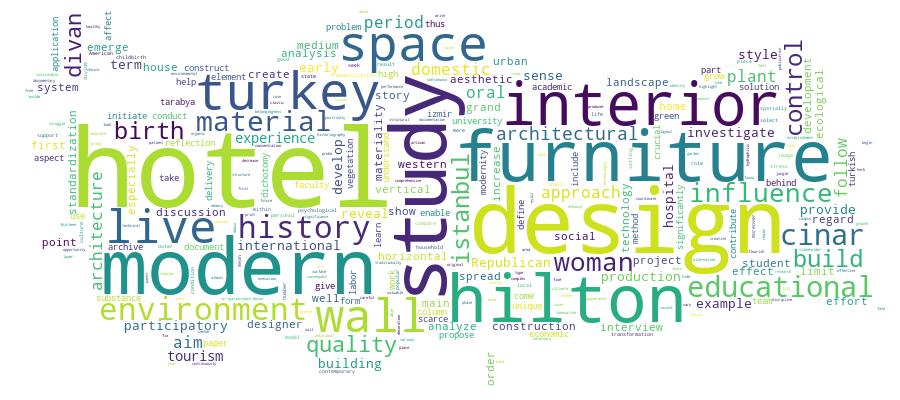
Competency Cloud
8 results
Scholarly Output Search Results
Now showing 1 - 8 of 8
Conference Object Living Walls Enhancing Quality of Educational Environments(Iated-Int Assoc Technology Education & Development, 2018) Hasirci, Deniz; Kaştaş Uzun, İpek; Atmaca, HandeLiving walls provide an effective solution in landscaping in educational environments where space is scarce and therefore, valuable. Landscaping in educational environments is crucial for learning minds, positively affecting concentration, memory, and academic performance, as well as, well-being and quality of life. In this study, the aim was to build a living wall on the Izmir University of Economics (IUE) campus in Izmir, Turkey that had limited horizontal space for landscaping. The living wall structure was fixed on six 16 meter high columns of the Faculty of Fine Arts and Design building -currently, the highest in Turkey. An educational and unique aspect of the living wall was that it was designed and constructed with a participatory approach, to the ultimate point of planting the plants. Led by a design and construction team from IUE, Interior Architecture and Environmental Design students were involved in the design of the plant layout as well as the planting. Each student designed one of the columns and the designs were revised to enable a more coordinated appearance, and one that would follow the lines of the building. With a continuous learning approach, the design team took part in all phases of the project -research, design, plant choice, controlling the application, planting, and follow up work including documenting the development of the garden. With the decreased amount of green spaces in urban areas, vertical spaces are increasingly providing an ecological and aesthetic alternative to classic horizontal landscaping options. A living wall can be defined as a system covered with various types of vegetation forming a fauna on its own, either as a part of a building or free structures. The vegetation varies from grasses to herbs, to fruits and vegetables. However, the main idea is that there is a structural base, that is layered with a hydrophilic substance, and inside which there is the growing substance which is organic or inorganic. There are two main systems that are used in today's living walls, which are panel and felt. The significance of the study that uses the felt system working like soil, comes from the ecological and creative solution to today's growing problem regarding urban green spaces in educational environments, as well as the participatory approach to the design process. After five years, the living wall is healthy with careful regular maintenance. The plant growth and living wall development is continuously controlled by visual and technical documentation. The research can be furthered in other vertical surfaces on this and other educational establishments where horizontal space is scarce, with developing technology to develop irrigation systems. The study shows that concrete jungles are not the fate of urban educational environments, and being an innovative and sustainable application, living walls are proposed to be the future of vegetation. Approaching an ecological problem in a participatory way from the beginning to the execution was educational for not only the students, but all stakeholders, and has also led to a sense of identity and belongingness in the faculty, that one of the main aims of participatory design processes.Conference Object Standardization of Domestic Space in Printed Media in Early Republican Period Turkey(Iop Publishing Ltd, 2020-12-01) Atmaca, Hande; Çetin, Hande AtmacaThis study aims to analyse how Western efforts on standardization of domestic life reflected on home sphere and women's role in the household in Early Republican period Turkey (1930-1950). Transformation of domestic space was a central discussion within the modernization agenda of the Early Republican period in Turkey. In parallel, women had a crucial role at home, as the maker of a well-functioning and rational space and daily life. Therefore, popular media and architectural magazines targeted women and gave examples of a new house to be organized within this regard. These journals mostly published household goods, furniture or scenes of interiors from Europe and the U.S, which were far from the traditional meaning of the house in Turkey. The proposed house was divided into sections and standardized, comfortable and simple were the keywords, and women were the administrators of order and science in the rationalization of domestic space. This study, as a method, evaluates the standardization studies about domestic space with examples from architectural or popular media and aims to reveal the reflections Western modernization efforts in Early Republican period Turkey.Master Thesis Patient Centered Approaches in Labor and Delivery Room Design in Hospitals: Case Study in Dokuz Eylül University Hospital(İzmir Ekonomi Üniversitesi, 2013) Atmaca, Hande; Hasırcı, DenizGünümüzde doğumun doğal seyrinden farklılaşması, medikal yöntemlerle gerçekleştirilen doğumun yaygınlaşması sağlık otoriteleri tarafından eleştirilen bir konu haline gelmiştir. Doğumun evden hastaneye taşınmasıyla anne adayı hasta, doğum ise patolojik bir olay olarak görülmeye başlanmıştır. Hastaneler ise bu durumun sonucu olarak hasta ve bebeğin sağlığını gözederken anne, bebek ve ailenin sosyal ve psikolojik gereksinimlerini gözardı etmişlerdir. Annenin doğum öncesi psikolojik durumunun doğum üzerinde ve sonrasında, doğumun kolaylığında ve anne-bebek ilişkisi üzerinde birçok etkisinin olduğu günümüzde yapılan çalışmalarca kanıtlanmıştır. Aynı çalışmalar kadınların doğum deneyimlerinde en çok kontrol hissine ihtiyaç duyduklarını ve çevresel kontrolün de bunlardan en önemlilerinden olduğunu göstermektedir (National Childbirth Trust, 2003). Hastaneler ise kadınların doğum süresince en pasif aktör oldukları yerlerdir. Kontrol hissinin eksikliği hastane mekanlarında stres ve negatif sağlık sonuçları doğurmaktadır. Çalışmanın amacı yapılı çevre üzerindeki kontrol hissinin daha iyi bir doğum deneyimine katkısı olup olmadığını araştırmaktır. Kontrol etmenlerinden hangilerinin kadınlar üzerinde en çok etkisi olduğunu görmek için, iç mekan elemanlarından hangilerinin kontrol hissine yardımcı olduğunu bulmak amaçlanmaktadır. Sonuçlara göre iç mekan tasarımının ve kontrol hissinin doğum deneyimine pozitif etkileri bulunmaktadır.Article Citation - WoS: 3Citation - Scopus: 3Materiality of Mid-Century Modern Furniture in Turkey(Istanbul Univ, Research Inst Turkology, Dept Art History, 2021-02-05) Ultav, Zeynep Tuna; Hasirci, Deniz; Atmaca, Hande; Çetin, Hande AtmacaThe modern interior emerged as a complex phenomenon, an interchange of modernity and its materiality. One of the constituent elements of this complexity is the progressive relationship with technology. This paper explores the materiality of furniture in terms of its material qualities, production technologies, craft component and inefficacies. The paper focuses on mid-century modern furniture in Turkey as a unique example in the history of furniture design, especially in terms of materiality. In order to understand the material qualities of this historical context, oral history provided a vital methodological tool to uncover the philosophy behind production, contemporary conditions and the designers' personal experiences through their own words. This enables the study to add significantly to the limited knowledge about modern furniture and especially materials in Turkey. The analysis is divided into three parts: materials, production technologies and difficulties. By investigating the material qualities of a furniture piece, the study extends beyond mere forms or styles to cultural productions that narrate the country's efforts to develop and thrive. In addition, it reveals the evolution of both materials and manufacturing techniques. Finally, by connecting these stories to specific furniture pieces, this study documents furniture not just as an artefact but also as the final product of an assemblage of people, materials, and techniques.Article Mobilizing Nature-Based Solutions Through Temporary Urban Interventions: A Civic Guide to Ephemeral Landscapes(2025) Doğu, Tuba; Hande Atmaca; Doğu, Tuba; Çetın, Hande AtmacaThe potential of permeable urban landscapes has gained increasing attention in contemporary academic scholarship on nature-based solutions (Nbs). The common thread of these solutions is related to pressing issues arising from responses to climate change caused by urban densification, necessitating innovative strategies for enhancing environmental resilience. However, these strategies often require extensive timeframes and large-scale implementation. In contrast, temporary approaches to urbanism have the potential to provide answers to these strategies by focusing on citizen-engaged, small-scale, low-cost and low-tech actions. This study engages these two planning approaches in dialogue by focusing on overlooked urban interstices—small and unnoticed impervious spaces that have significant potential to become permeable. Developing a conceptual framework, the research explores how ephemeral installations can transform these interstices into nature-based, scalable and socially engaged landscapes. Applying this framework, the study adopts prototyping as an experimental research method, structured around three phases: (1) experimentation: incorporating nature-based aggregates, (2) fabrication: forming scalable and modular tiles, and (3) dissemination: creating social value with workshops. Building over the findings of these phases, the paper concludes with a proposal for a civic urban guide that outlines all these practical strategies for activating underutilized spaces through accessible and low-maintenance interventions. The guide aims to inspire civic engagement and environmental awareness, offering a model for small-scale, bottom-up interventions in line with broader Nbs objectives. In doing so, the research proposes a comprehensive approach to urban resilience that bridges planning theories, material experimentation, and public engagement.Article After Istanbul Hilton: Turkey's Local-Global Dichotomy in the 1950s Interiors of Divan Hotel and Cinar Hotel(Routledge Journals, Taylor & Francis Ltd, 2022-01-02) Atmaca, Hande; Uz, Funda; Tuna Ultav, Zeynep; Atmaca Cetin, HandeThis study analyzes the socio-spatial qualities of hotel interiors built in Turkey after the opening of the Istanbul Hilton Hotel in 1955. It aims to reveal the construction of the modern interior in Turkey and its effects on social life at the Divan Hotel (1956) and Cinar Hotel (1958), which were Turkey's first modern hotels built with local capital and local architects. As Turkey's first modern hotel, Istanbul Hilton was regarded as a model for subsequent tourism buildings. Cinar and Divan Hotels hotels were usually compared with the Hilton's aesthetics, and seen as reminiscent of the Hilton, particularly the outer shell and building formation. However, their interiors have been completely overlooked. This is an important omission, because, contrary to its modernist outer shell, the Istanbul Hilton Hotel interiors were designed with a contrasting orientalist approach. This study therefore investigates how this dichotomy influenced the interiors of the Divan Cinar Hotels. Drawing on the theory of transculturation by Ortiz, this study challenges the view that these hotels were mere host sites, embodying and copying modern architecture without any filtering. A complete interior atmosphere was analyzed in terms of the hotels' materiality, such as furniture and art objects, but moreover, the social meaning of the space and transformation of social habits are examined to discuss local-global dichotomies. Information for the analysis was gathered through a literature review, observations, and an analysis of images obtained from personal archives and databases. This data was supported with oral interviews with architects, interior designers, craftsmen, tourism professionals, and contemporary witnesses. The findings show that the Divan Hotel and Cinar Hotel were both spatially and socially influenced by the Istanbul Hilton Hotel. However, they also sought a modernity of their own by carefully selecting and blending western influences, both spatially and socially. Most importantly, since the Divan Cinar Hotels refrained from the image difference between the modern and connotations of the orient, these spaces can be read as interpretations of an internalized modernity.Article Citation - WoS: 2Citation - Scopus: 2Reflections of the Istanbul Hilton Hotel on Mid-Century Hotel Buildings in Turkey(Istanbul Univ, Research Inst Turkology, Dept Art History, 2019-07-31) Atmaca, Hande; Ultav, Zeynep Tuna; Uz, Funda; Çetin, Hande AtmacaThe 1950s indicate a period of America's influence on the world economy and culture with its post-war power. Mobility increased with developing transportation networks and emerging consumer culture, so the number and importance of hotels increased as a result of this socio-political, economic and architectural condition of the period. In the 1950s, American chain hotels emerged, and soon spread overseas, following the dominant aesthetics of the country, a version of the International Style termed as American Modernism. The spread of International Style through modern hotels was most prominent in Hilton Hotels. The first modern hotel to arrive in Turkey was the Istanbul Hilton Hotel which influenced other hotel buildings in the 1950s to follow the International Style. The Hilton Hotel was frequently accepted as a model behind the tourism discussions and the initiatives that followed were compared with it, although the spread of its architectural language created a debate in architectural circles. For this reason, the focal point of this study is the hotel buildings designed in the International Style between 1950 and 1960, which possess architectural similarities with the Hilton Hotel. The influence of the Hilton Hotel on other hotel buildings in the 1950s is investigated along with the period's tourism discussions to have a wider perspective of the Hilton Hotel's influence on tourism. The hotels selected for the study are ones that carry the aesthetical principles of the Hilton Hotel, and were built or started construction in 1950s; Buyukada Anadolu Club Hotel, Cinar Hotel, Eskisehir Porsuk Hotel, Grand Efes Hotel, and Grand Tarabya Hotel. These examples illustrate the effects of the Hilton Hotel on the development of modern tourism architecture.Article Citation - WoS: 1Looking Into Mid-Century Modern Furniture Design in Turkey Through Oral History(Routledge Journals, Taylor & Francıs Ltd, 2024-02-19) Ultav, Zeynep Tuna; Hasırcı, Deniz; Atmaca, Hande; Tuna Ultav, ZeynepFurniture design has traditionally taken second place to architecture in historiography, especially in Turkey. The consequent limited furniture-related academic publications, original material, and documentation make it necessary to probe further into Turkey's modern furniture history. The DATUMM (Documenting and Archiving Turkish Modern Furniture) Project (datumm.org) (2013-) was initiated to help fill this gap in the history of modern furniture design in Turkey between 1930 and 1975. Other than highlighting furniture, the documentary aimed to initiate an oral history project that has not been conducted in the design realm before in Turkey. Oral history interviews were conducted with thirteen contributors, including designers, artisans, and producers, who have significantly influenced Turkish modern furniture design. This method gave a voice to those who have not been able to contribute to Turkey's design history and reveals individual stories to construct a more comprehensive narrative. These interviews thus provide valuable opportunities to grasp what is hidden in the written history, and understand the shared stories, experiences, and struggles of designers to create a flourishing discipline from almost nothing.
