
Ünlütürk, Mehmet Süleyman
Loading...

Profile URL
Name Variants
Unluturk, MS
Unluturk, Mehmet Suleyman
Unluturk, Mehmet S.
Unluturk, Mehmet Suleyman
Unluturk, Mehmet S.
Job Title
Email Address
suleyman.unluturk@ieu.edu.tr
Main Affiliation
05.04. Software Engineering
Status
Former Staff
Website
ORCID ID
Scopus Author ID
Turkish CoHE Profile ID
Google Scholar ID
WoS Researcher ID
Sustainable Development Goals
 1
1NO POVERTY
0
Research Products
 2
2ZERO HUNGER
1
Research Products
 3
3GOOD HEALTH AND WELL-BEING
1
Research Products
 4
4QUALITY EDUCATION
2
Research Products
 5
5GENDER EQUALITY
0
Research Products
 6
6CLEAN WATER AND SANITATION
0
Research Products
 7
7AFFORDABLE AND CLEAN ENERGY
2
Research Products
 8
8DECENT WORK AND ECONOMIC GROWTH
1
Research Products
 9
9INDUSTRY, INNOVATION AND INFRASTRUCTURE
2
Research Products
 10
10REDUCED INEQUALITIES
0
Research Products
 11
11SUSTAINABLE CITIES AND COMMUNITIES
0
Research Products
 12
12RESPONSIBLE CONSUMPTION AND PRODUCTION
0
Research Products
 13
13CLIMATE ACTION
0
Research Products
 14
14LIFE BELOW WATER
0
Research Products
 15
15LIFE ON LAND
0
Research Products
 16
16PEACE, JUSTICE AND STRONG INSTITUTIONS
0
Research Products
 17
17PARTNERSHIPS FOR THE GOALS
0
Research Products

Documents
40
Citations
274
h-index
7

Documents
27
Citations
172

Scholarly Output
31
Articles
19
Views / Downloads
108/62
Supervised MSc Theses
2
Supervised PhD Theses
0
WoS Citation Count
203
Scopus Citation Count
237
Patents
0
Projects
0
WoS Citations per Publication
6.55
Scopus Citations per Publication
7.65
Open Access Source
5
Supervised Theses
2
| Journal | Count |
|---|---|
| Journal of Medıcal Systems | 4 |
| International Conference on Applied Computer Science - Proceedings | 4 |
| International Conference on Computers - Proceedings | 2 |
| Nondestructıve Testıng And Evaluatıon | 2 |
| Computer Methods And Programs in Bıomedıcıne | 2 |
Current Page: 1 / 4
Scopus Quartile Distribution
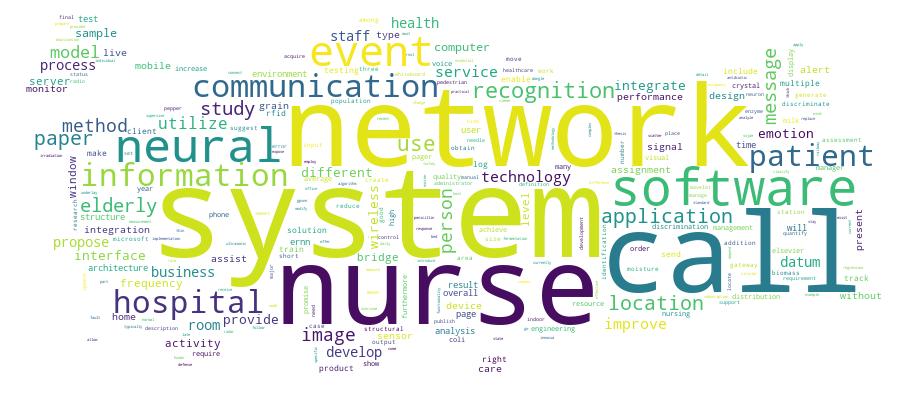
Competency Cloud
29 results
Scholarly Output Search Results
Now showing 1 - 10 of 29
Conference Object Real Time Transaction Server(2010) Ünlütürk, Mehmet Süleyman; Atay C.In this paper, a windows server is designed to facilitate communication in a complex system such as hospital information system. The server has a Publish - Subscribe architecture that acts like a network router. Each client in the system sends its events with an event type. These events are received by any other client in the system which has a subscription to a channel that includes that event type. With this architecture, a client needs to open a single socket link to the real time transaction server (RTTS), regardless of the number of event types. This eliminates the burden of opening and maintaining multiple links for communication needs that are inherent in a complex system. Communication overhead is further reduced by providing a client control windows DLL that exposes a small set of methods, properties and events to connect, send and receive events from the system through RTTS.Article Citation - WoS: 7Citation - Scopus: 7Corroboration of Ndt and Deconvolution Neural Networks for Pedestrian Bridge Health Assessment(Taylor & Francis Ltd, 2015-01-02) Kilic, Gokhan; Unluturk, Mehmet S.This paper describes the specific application of the non-destructive testing methods of visual inspection and ground penetrating radar (GPR) to a pedestrian bridge in Izmir, Turkey. The paper concentrates on the implementation of a deconvolution neural network (DNN) which is a procedure that employs neural network algorithms. By introducing collected GPR data to the DNN, the existence and location of cracks, rebar and moisture ingress on pedestrian pathways can reliably be located, thus providing superior information on which decisions relating to the functionality and life expectancy of a structure can be formulated. This study will be of benefit to engineers in providing a detailed and dependable assessment of the current state of structures such as pedestrian bridges.Article Citation - WoS: 6Citation - Scopus: 7Improving Communication Among Nurses and Patients(Elsevier Ireland Ltd, 2015-07) Unluturk, Mehmet S.; Ozcanhan, Mehmet H.; Dalkilic, GokhanPatients use nurse call systems to signal nurses for medical help. Traditional push button-flashing lamp call systems are not integrated with other hospital automation systems. Therefore, nurse response time becomes a matter of personal discretion. The improvement obtained by integrating a pager system into the nurse call systems does not increase care efficiency, because unnecessary visits are still not eliminated. To obtain an immediate response and a purposeful visit by a nurse; regardless of the location of nurse in hospital, traditional systems have to be improved by intelligent telephone system integration. The results of the developed Nurse Call System Software (NCSS), the Wireless Phone System Software (WPSS), the Location System Software (LSS) and the communication protocol are provided, together with detailed XML message structures. The benefits of the proposed system are also discussed and the direction of future work is presented. (C) 2015 Elsevier Ireland Ltd. All rights reserved.Article Citation - WoS: 46Citation - Scopus: 54Testing of Wind Turbine Towers Using Wireless Sensor Network and Accelerometer(Pergamon-Elsevier Science Ltd, 2015-03) Kilic, Gokhan; Unluturk, Mehmet S.Structural Health Monitoring (SHM) is commonly used in the health assessment of wind turbines. The system is installed during construction of the structure and consists of wired sensors connected to a central data acquisition unit via cables. In most cases, the data acquisition unit is located on the wind turbine itself. SHM is verified by comparison of results over time from wireless sensor systems. This study presents the Supervised Event Server Health Monitoring System (SESHMS) as a relatively simple, economical wireless system for use within the arena of structural health assessment. (C) 2014 Elsevier Ltd. All rights reserved.Article Citation - WoS: 6Citation - Scopus: 6Wavelet Analysis With Different Frequency Gpr Antennas for Bridge Health Assessment(Amer Soc Testing Materials, 2016-01-01) Kilic, Gokhan; Unluturk, Mehmet S.This study presents an examination and a presentation of ground-penetrating radar (GPR) on a heavily used high-speed railway bridge in Turkey. This study also considers GPR mapping using two different antennas (2 GHz and 500 MHz), and their reliability in terms of locating subsurface features, such as rebar (lower and upper reinforcement) and the presence of moisture. Moreover, GPR interesting results in terms of the structural crack locations by detecting discontinuities and breakdowns in the wavelets' travel with the incorporation of wavelet analysis into the process of the collected raw data of the highspeed railway bridge under survey. This study promotes the GPR and the wavelet analyses in the health monitoring and assessment of bridge structures. By increasing insight into the kinds of structural deterioration that can occur in structures, such as high-speed railway bridges, this study also has implications for the process of tool selection in structural inspection. The wavelet analysis can be used as an effective tool in analyzing and presenting the results of the GPR survey.Article Citation - WoS: 1Citation - Scopus: 2Discrimination of Bio-Crystallogram Images Using Neural Networks(Springer, 2013-02-09) Unluturk, Sevcan; Unluturk, Mehmet S.; Pazir, Fikret; Kuscu, AlperThis study utilized a unique neural network model for texture image analysis to differentiate the crystallograms from pairs of fresh red pepper fruits from conventional and organic farms. The differences in visually analyzed samples are defined as the distribution of crystals on the circular glass underlay, the thin or thick structure of crystal needles, the angles between branches and side needles, etc. However, the visual description and definition of bio-crystallogram images has major disadvantages. A novel methodology called an image neural network (INN) has been developed to overcome these shortcomings. The 1,488 x 2,240 pixel bio-crystallogram images were acquired in a lab and cropped to 425 x 1,025 pixel images. These depicted either a conventional sweet red pepper or an organic sweet red pepper. A set of 19 images was utilized to train the image neural network. A new set of 4 images was then prepared to test the INN performance. Overall, the INN achieved an average recognition performance of 100 %. This high level of recognition suggests that the INN is a promising method for the discrimination of bio-crystallogram images. In addition, Hinton diagrams were utilized to display the optimality of the INN weights.Article Citation - WoS: 1Citation - Scopus: 2Using Hl7 in Hospital Staff Assignments(Pergamon-Elsevier Science Ltd, 2014-02) Unluturk, Mehmet S.Hospital staff assignments are the instructions that allocate the hospital staff members to the hospital beds. Currently, hospital administrators make the assignments without accessing the information regarding the occupancy of the hospital beds and the acuity of the patient. As a result, administrators cannot distinguish between occupied and unoccupied beds, and may therefore assign staff to unoccupied beds. This gives rise to uneven and inefficient staff assignments. In this paper, the hospital admission-discharge-transfer (ADT) system is employed both as a data source and an assignment device to create staff assignments. When the patient data is newly added or modified, the ADT system updates the assignment software client with the relevant data. Based on the relevant data, the assignment software client is able to construct staff assignments in a more efficient way. (c) 2013 Elsevier Ltd. All rights reserved.Conference Object Supervising event executive(2010-04) Ünlütürk, Mehmet Süleyman; Atay C.There are many advances in nurse-call devices but there is a lack of proper integration and interoperation among them. This paper presents a software application to join these devices together in a LAN environment such as Hospital Information System. This software application is called Supervising Event Executive (SEE) that is developed to provide a common, convenient, and reliable means of transferring system events (and commands). The SEE primarily supports four types of applications. First type is called event publisher that generates LAN events from devices. Second type is called event subscriber that consumes LAN events from devices. A subscriber application typically takes some action based on an event. Third type is called resource provider that provides resources or services to consumer applications. The resource provider is typically managed through commands in a request / response nature. In addition, the resource provider may also publish events regarding the status of managed resources. The final type is called resource consumer that consumes resources or services managed by 'Resource Provider' applications. ©2009 IEEE.Article Citation - WoS: 1Citation - Scopus: 2Process Neural Network Method: Case Study I: Discrimination of Sweet Red Peppers Prepared by Different Methods(Hindawi Publishing Corporation, 2011-02-27) Unluturk, Sevcan; Unluturk, Mehmet S.; Pazir, Fikret; Kuscu, AlperThis study utilized a feed-forward neural network model along with computer vision techniques to discriminate sweet red pepper products prepared by different methods such as freezing and pureeing. The differences among the fresh, frozen and pureed samples are investigated by studying their bio-crystallogram images. The dissimilarity in visually analyzed bio-crystallogram images are defined as the distribution of crystals on the circular glass underlay and the thin or the thick structure of crystal needles. However, the visual description and definition of bio-crystallogram images has major disadvantages. A methodology called process neural network (ProcNN) has been studied to overcome these shortcomings.Article Citation - WoS: 4Citation - Scopus: 5Advanced Nurse-Patient Communication System(Springer, 2011-05-04) Unluturk, Mehmet S.Effective communication is the most important part of any healthcare organization. For many years, hospital nurse call solutions had been stand-alone systems with occasional integration to pocket paging for outputting patient call alerts to mobile staff. In the late 1990's, technology enabled in-building wireless phones to supplement or replace paging systems as a means of not only sending alerts, but also enabling voice communication between mobile staff and patients. Today's nurse call market requires integration of additional information from location and ADT (admit, discharge, transfer) systems into what have traditionally been nurse call applications. This system information is required not only at the nursing station, pagers, and phones, but also at PC's placed on each patient care floor in hallways, nurse stations, and offices, and at areas away from the patients, including administrator and clinical engineering offices. It is crucial that nurses have the latest patient information in their hand wherever they go in the hospital. In this paper, MatchMaker.NET has been developed to integrate all these technologies into the hospital's LAN to improve nurse-patient communication.

- «
- 1 (current)
- 2
- 3
- »