İşlekel, Sertaç

Loading...
Profile Picture
Name Variants
Işlekel, Sertaç
Islekel, S.
Islekel, Sertac
İşlekel, Sertaç
Job Title
Email Address
sertac.islekel@gmail.com
Main Affiliation
07.01. Health Management
Status
Former Staff
Website
ORCID ID
Scopus Author ID
Turkish CoHE Profile ID
Google Scholar ID
WoS Researcher ID

Sustainable Development Goals

5

GENDER EQUALITY
GENDER EQUALITY Logo

0

Research Products

9

INDUSTRY, INNOVATION AND INFRASTRUCTURE
INDUSTRY, INNOVATION AND INFRASTRUCTURE Logo

0

Research Products

13

CLIMATE ACTION
CLIMATE ACTION Logo

0

Research Products

8

DECENT WORK AND ECONOMIC GROWTH
DECENT WORK AND ECONOMIC GROWTH Logo

0

Research Products

14

LIFE BELOW WATER
LIFE BELOW WATER Logo

0

Research Products

17

PARTNERSHIPS FOR THE GOALS
PARTNERSHIPS FOR THE GOALS Logo

0

Research Products

1

NO POVERTY
NO POVERTY Logo

0

Research Products

2

ZERO HUNGER
ZERO HUNGER Logo

0

Research Products

4

QUALITY EDUCATION
QUALITY EDUCATION Logo

0

Research Products

11

SUSTAINABLE CITIES AND COMMUNITIES
SUSTAINABLE CITIES AND COMMUNITIES Logo

0

Research Products

16

PEACE, JUSTICE AND STRONG INSTITUTIONS
PEACE, JUSTICE AND STRONG INSTITUTIONS Logo

0

Research Products

3

GOOD HEALTH AND WELL-BEING
GOOD HEALTH AND WELL-BEING Logo

1

Research Products

6

CLEAN WATER AND SANITATION
CLEAN WATER AND SANITATION Logo

0

Research Products

12

RESPONSIBLE CONSUMPTION AND PRODUCTION
RESPONSIBLE CONSUMPTION AND PRODUCTION Logo

0

Research Products

10

REDUCED INEQUALITIES
REDUCED INEQUALITIES Logo

0

Research Products

15

LIFE ON LAND
LIFE ON LAND Logo

0

Research Products

7

AFFORDABLE AND CLEAN ENERGY
AFFORDABLE AND CLEAN ENERGY Logo

0

Research Products
Documents

25

Citations

817

h-index

14

Documents

31

Citations

661

Scholarly Output

3

Articles

3

Views / Downloads

0/0

Supervised MSc Theses

0

Supervised PhD Theses

0

WoS Citation Count

16

Scopus Citation Count

15

WoS h-index

2

Scopus h-index

2

Patents

0

Projects

0

WoS Citations per Publication

5.33

Scopus Citations per Publication

5.00

Open Access Source

0

Supervised Theses

0

JournalCount
Bıoanalysıs1
Dna Repaır1
Journal of Neuropathology And Experımental Neurology1
Current Page: 1 / 1

Scopus Quartile Distribution

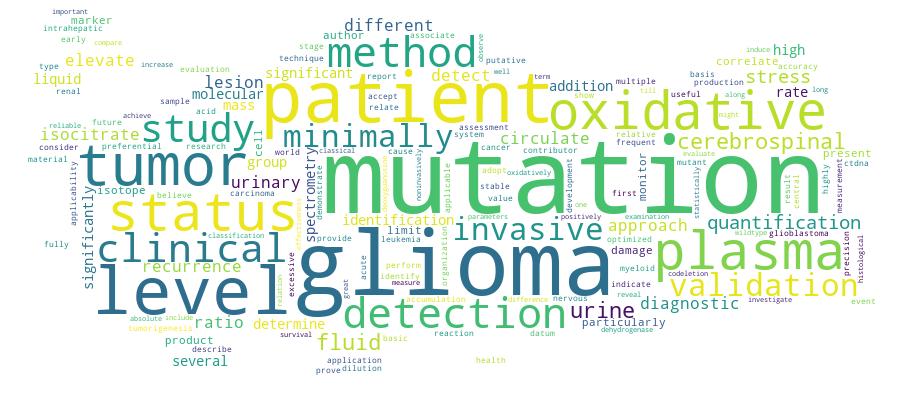
Competency Cloud

GCRIS Competency Cloud

Scholarly Output Search Results

Now showing 1 - 3 of 3
  • Article
    Citation - WoS: 5
    Citation - Scopus: 3
    Urinary 8-Hydroxy Levels Are Elevated in Patients With Idh1-Wildtype Glioblastoma and Are Associated With Tumor Recurrence in Gliomas
    (Elsevier, 2023) Tuna, Gamze; Bekar, Nazli Ecem Dal; Islekel, Sertac; Islekel, Gul Huray
    2021 World Health Organization (WHO) Central Nervous System (CNS) Tumor Classification includes molecular diagnostic parameters such as isocitrate dehydrogenase (IDH) mutation or 1p19q codeletion status, in addition to the classical histological classification. Several studies have revealed that patients with IDH1 mutation have a longer survival rate compared to wildtype individuals. In glioma cells, increased oxidative stress has been identified. However, till now, the relation between oxidative stress levels and IDH1 mutation status in those patients was not examined. Therefore, the aim of this study was to investigate the urinary levels of oxidatively induced DNA damage products, 8-hydroxy-2 '- deoxyguanosine (8-OH-dG), (5 ' R) and (5 ' S)-8,5 '-cyclo-2 '-deoxy-adenosines (R-cdA and S-cdA) as reliable oxidative stress markers in patients with IDH1-wildtype (n = 20) and IDH1-mutant (n = 22) glioma. Absolute quantification of 8-OH-dG, R-cdA and S-cdA was achieved by liquid chromatography-tandem mass spectrometry with isotope dilution. The levels of 8-OH-dG were significantly greater in IDH1-wildtype glioma patients than those in IDH1-mutant ones (p = 0.017). No statistically significant difference was observed for R-cdA and S-cdA levels. 8-OH-dG levels were positively correlated with patients' tumor recurrence in all patients (r = 0.382, p = 0.014). The mutation status of glioma is well correlated with oxidative stress. Examination of noninvasively measured oxidative DNA damage products along with IDH1 mutation status in glioma patients, might be particularly important in terms of evaluating and monitoring the effectiveness of treatment.
  • Article
    Citation - WoS: 1
    Citation - Scopus: 1
    Development and Validation of an Lc-ms/Ms Method for D- and L-2 Acid Measurement in Cerebrospinal Fluid, Urine and Plasma: Application To Glioma
    (Future Sci Ltd, 2022) Dal-Bekar, Nazli Ecem; Tuna, Gamze; Islekel, Sertac; Islekel, Gul Huray
    Aim: IDH mutations have been identified as frequent molecular lesions in several tumor types, particularly in gliomas. As a putative marker of IDH mutations, elevated D-2-HG has been reported in glioma, acute myeloid leukemia and intrahepatic cholangiocarcinoma. Excessive production of L-2-HG has also been described in renal cell carcinoma and 2-hydroxyaciduria. Materials & methods: The authors present a fully optimized stable isotope dilution multiple reaction monitoring method for quantification of D-/L-2-HG using LC-MS/MS. This is the first method validation study performed on cerebrospinal fluid, plasma and urine demonstrating clinical applicability with samples from glioma patients. Results & conclusion: This method validation study showed high accuracy and precision with low limit of detection and limit of quantification values. The authors believe that the presented approach is highly applicable for basic and clinical research on related pathologies.
  • Article
    Citation - WoS: 10
    Citation - Scopus: 11
    Minimally Invasive Detection of Idh1 Mutation With Cell-Free Circulating Tumor Dna and D-2 D/L-2-hydroxyglutarate Ratio in Gliomas
    (Oxford Univ Press Inc, 2022) Tuna, Gamze; Dal-Bekar, Nazli Ecem; Akay, Ali; Ruksen, Mete; Islekel, Sertac; Islekel, Gul Huray
    Isocitrate dehydrogenase-1 (IDH1) mutation is accepted as one of the earliest events in tumorigenesis in gliomas. This mutation causes preferential accumulation of D- relative to L-enantiomer of 2-hydroxyglutarate (2-HG). Minimally invasive techniques to detect IDH1 mutation may prove useful for clinical practice. We adopted 2 different diagnostic approaches to detect IDH1 mutation status in glioma patients: Evaluation of D- and L-2-HG levels in cerebrospinal fluid (CSF), urine, and plasma, and identification of IDH1 mutation using cell-free circulating tumor DNA (ctDNA) in CSF and plasma. Forty-nine glioma patients in different stages were included. Levels of D- and L-2-HG were determined using liquid chromatography-tandem mass spectrometry; IDH1 R132H mutation was determined by digital-PCR. D-2-HG levels and D/L-2-HG ratio (rDL) in CSF and rDL in plasma were significantly higher in the mutant group than in the wild-type group (p = 0.029, 0.032, 0.001, respectively). The IDH1 mutation detection rates in CSF- and plasma-ctDNA were 63.2% and 25.0%, respectively. These data indicate that D-2-HG values in CSF and rDL in plasma and CSF can be considered as significant contributors to the identification of IDH1 mutation status. In addition, detection of IDH1 mutation in CSF-ctDNA from glioma patients provides a basis for future use of ctDNA for minimally invasive clinical assessment of gliomas.