
Özgül, Ecem
Loading...
Profile URL
Name Variants
Ozgul, Ecem
Özgül, E.
Özgül, E.
Job Title
Email Address
ecem.ozgul@ieu.edu.tr
Main Affiliation
07.02. Nursing
Status
Current Staff
Website
ORCID ID
Scopus Author ID
Turkish CoHE Profile ID
Google Scholar ID
WoS Researcher ID
Sustainable Development Goals
 1
1NO POVERTY
0
Research Products
 2
2ZERO HUNGER
0
Research Products
 3
3GOOD HEALTH AND WELL-BEING
1
Research Products
 4
4QUALITY EDUCATION
0
Research Products
 5
5GENDER EQUALITY
0
Research Products
 6
6CLEAN WATER AND SANITATION
0
Research Products
 7
7AFFORDABLE AND CLEAN ENERGY
0
Research Products
 8
8DECENT WORK AND ECONOMIC GROWTH
0
Research Products
 9
9INDUSTRY, INNOVATION AND INFRASTRUCTURE
0
Research Products
 10
10REDUCED INEQUALITIES
0
Research Products
 11
11SUSTAINABLE CITIES AND COMMUNITIES
0
Research Products
 12
12RESPONSIBLE CONSUMPTION AND PRODUCTION
0
Research Products
 13
13CLIMATE ACTION
0
Research Products
 14
14LIFE BELOW WATER
0
Research Products
 15
15LIFE ON LAND
0
Research Products
 16
16PEACE, JUSTICE AND STRONG INSTITUTIONS
1
Research Products
 17
17PARTNERSHIPS FOR THE GOALS
0
Research Products

Documents
14
Citations
57
h-index
4

Documents
14
Citations
58

Scholarly Output
19
Articles
17
Views / Downloads
129/146
Supervised MSc Theses
0
Supervised PhD Theses
0
WoS Citation Count
57
Scopus Citation Count
54
Patents
0
Projects
0
WoS Citations per Publication
3.00
Scopus Citations per Publication
2.84
Open Access Source
10
Supervised Theses
0
| Journal | Count |
|---|---|
| Sağlık Bilimleri Üniversitesi Hemşirelik Dergisi (Online) | 2 |
| Turkısh Journal of Gerıatrıcs-Turk Gerıatrı Dergısı | 2 |
| Educatıonal Gerontology | 1 |
| Gerıatrıc Nursıng | 1 |
| Gümüşhane Üniversitesi Sağlık Bilimleri Dergisi | 1 |
Current Page: 1 / 4
Scopus Quartile Distribution
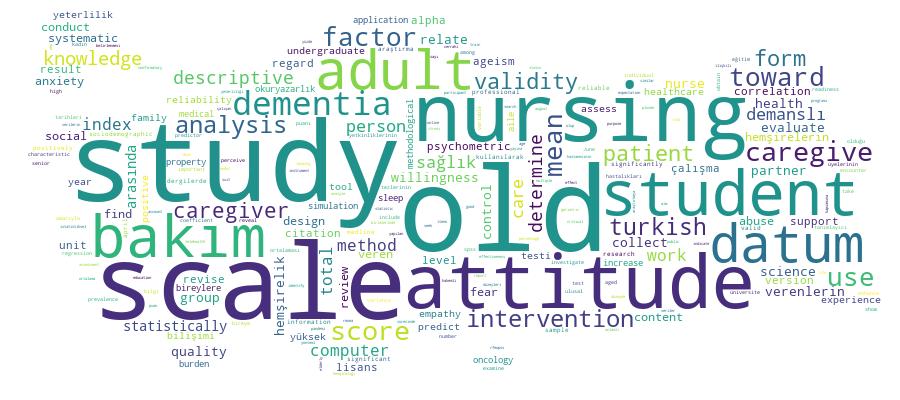
Competency Cloud
19 results
Scholarly Output Search Results
Now showing 1 - 10 of 19
Article Citation - WoS: 2Citation - Scopus: 2Psychometric Properties of the Turkish Version of the Readiness To Encounter Partner Abuse Patients Scale(Wiley, 2022-06-28) Curuk, Gulsum Nihal; Ozgul, Ecem; Alkanat, Hafize OzdemirAim Partner abuse is a global public health issue with both short- and long-term health effects. Healthcare professionals frequently encounter patients who experience partner abuse and should be knowledgeable about how to respond to these individuals. The aim of this study was to examine the validity and reliability of the Turkish version of The Readiness to Encounter Partner Abuse Patients (READI) Scale. Design A descriptive, methodological and cross-sectional design was used. Methods Data were collected with a sociodemographics form and the READI-T Scale between 13 December 2021 and 5 January 2022. The study sample comprised nursing students (n = 323) at or over the age of 18 years and accepting to take part in the study. The linguistic and content validity and confirmatory factor analysis were used to assess the validity of the scale. The reliability of the scale was achieved using Cronbach's alpha, item-total correlations and test-retest. Results The READI-T Scale had a content validity index of 0.99 and adequate sensitivity. The factor loadings ranged from 0.63 to 0.84 for the self-efficacy sub-dimension, from 0.82 to 0.91 for the emotional readiness sub-dimension, from 0.47 to 0.81 for the motivational readiness sub-dimension and from 0.28 to 0.64 for the partner abuse knowledge sub-dimension. The CFA showed that the model had a good fit (x(2)/df = 1.792; GFI = 0.88; CFI = 0.94; RMSEA = 0.050). Cronbach's alpha was found to be 0.92 for the scale. Conclusion The READI-T Scale is a valid and reliable tool to determine whether Turkish nursing students are knowledgeable enough to encounter partner abuse patients. Impact This scale can be used to determine the training needs of healthcare professionals on partner abuse and may be useful as a pre-and posttest to determine the effects of partner abuse education programs. Thus, this scale may also assist early identification of persons who have a risk for partner abuse.Article Citation - WoS: 3Citation - Scopus: 3Investigating Older Adults Technology Attitudes: Psychometric Evaluation and Cross-Cultural Adaptation of the Techph Scale(Elsevier Ireland Ltd, 2025-11) Ozgul, Ecem; Doner, Nedime Hazal; Curuk, Gulsum NihalThis study aimed to examine the psychometric properties of the Turkish version of the TechPH scale (TechPH-T) among older adults. A descriptive, methodological, and cross-sectional design was employed. Data were collected between February and April 2025 using a sociodemographic information form and the TechPH-T scale. The validity of the scale was evaluated through psycholinguistic analysis, content validity, Exploratory Factor Analysis (EFA), and Confirmatory Factor Analysis (CFA). Reliability was assessed using Cronbach's alpha coefficient, item-total correlations, and test-retest reliability. The TechPH-T demonstrated excellent content validity, with a Content Validity Index (CVI) of 1.00, and showed adequate sensitivity. In the factor analyses, all factor loadings exceeded 0.30. CFA results indicated a good model fit (chi 2/df = 3.720, CFI = 0.924, IFI = 0.926, GFI = 0.955, RMR < 0.01, and 90 % confidence interval of RMSEA = 0.071). The Cronbach's alpha coefficient for the overall scale was 0.702. These findings suggest that the TechPH-T is a valid and reliable instrument for assessing technology attitudes among older adults in Turkey.Other İç Hastalıkları Hemşireliği Yüksek Lisans Tezlerinin Yayımlanma Durumu: Sistematik Derleme(2021-10-29) Karadağ, Songül; Curuk, Gulsum Nıhal; Özgül, EcemGiriş: Yüksek lisans tezlerinin yayına dönüştürülmesi, bilimsel bilginin paylaşılması için önem arz etmektedir. Amaç: Bu çalışma Türkiye’de yapılan iç hastalıkları hemşireliği yüksek lisans tezlerinin bilimsel makalelere dönüşme oranlarını belirlemek amacıyla sistematik derleme şeklinde yapılmıştır. Yöntem: Çalışmada Aralık 2019 ile Şubat 2020 tarihleri arasında, Yüksek Öğretim Kurulu Tez Merkezi veri tabanında Anabilim Dalı “İç Hastalıkları Hemşireliği” ve tez konu alanı “Hemşirelik” olan ve 2004-2018 yılları arasında hazırlanmış olan yüksek lisans tezleri taranmıştır. Bu tezlerin yayınlanma oranın belirlenmesi için birçok veritabanı (PubMed, Thomson Reuters Web of Science, Google Scholar, Türk Medline ve Ulusal Akademik Ağ ve Bilgi Merkezi) tez adı, yazarı ve danışmanın adı kullanılarak taranmıştır. Bulgular: Çalışma kapsamına alınan 616 tezin %31,4’ünün Science Citation Index, Science Citation Index Expanded veya Social Sciences Citation Index, %3,5’inin Emerging Sources Citation Index kapsamına giren dergilerde, %25,0’ının diğer uluslararası hakemli dergilerde, %19,9’unun Türk Medline ve Ulusal Akademik Ağ ve Bilgi Merkezi tarafından taranan ulusal hakemli dergilerde, %20,2’sinin ise diğer ulusal hakemli dergilerde yayımlandığı tespit edilmiştir. Sonuç: İç hastalıkları hemşireliği alanında yapılan yüksek lisans tezlerinin yarısından fazlasının yayına dönüştürülmediği saptanmıştır. Yayına dönüşen çalışmaların yarısından daha azının Science Citation Index, Science Citation Index Expanded veya Social Sciences Citation Index kapsamına giren dergilerde yayımlandığı tespit edilmiştir.Review Article Citation - WoS: 15Citation - Scopus: 16Telehealth Applications Used for Self-Efficacy Levels of Family Caregivers for Individuals With Dementia: a Systematic Review and Meta-Analysis(Mosby-Elsevier, 2023-01) Soylemez, Burcu Akpinar; Ozgul, Ecem; Kucukguclu, Ozlem; Yener, GörsevBackground: The effectiveness of telehealth applications for family caregivers of individuals with dementia remains unclear. The aim of this study is to investigate how telehealth-based interventions applied for family caregivers of individuals with dementia affect their self-efficacy levels, caregiving burden, stress, depression, and quality of life.Materials and Methods: This was a systematic review. Screening took place between April 30 and May 5, 2022, for the scope of the past 10 years (January 2012/May 2022). The related studies were screened over ten (10) databases and search engines both in English and Turkish, including CINAHL, Cochrane Library, MEDLINE, PsycINFO, PubMed and Web of Science, ULAKBIM, Turkish Medline, Tu euro rkiye Klinikleri, and YOK National The - sis Center. Keywords included in various medical topic titles identified upon consultation with literature review experts from a library. Methodological quality of the studies was evaluated using Critical Appraisal Checklists developed by the Joanna Briggs Institute for experimental and quasi-experimental studies. The data were synthesized by meta-analysis. Results: Two hundred and twelve (212) records were accessed in the databases. Of that, 12 studies (covering 1,013 caregivers) were selected for the meta-analysis. Statistically, the self-efficacy mean score was signifi- cantly higher in the intervention group than the control group after the intervention (SMD: 1.08, Z=3.12, p=0.002). The effectiveness of telehealth-based applications for caregivers' caregiving burden, stress, depres- sion and quality of life -- except for self-efficacy - was evaluated. The results of the intervention and control groups were similar after the intervention (SMD:-0.17, Z=0.82, p=0.41; MD:-0.60, Z=0.49, p=0.63, SMD:-0.04, Z=0.13, p=0.98; SMD: 0.15, Z=0.47, p=0.64, respectively).Conclusions: This systematic review and meta-analysis showed that telehealth applications were effective in elevating the self-efficacy levels of caregivers of individuals with dementia. However, no statistically signifi- cant difference was observed in terms of caregiving burden, stress, depression, or quality of life for care- givers.(c) 2022 Elsevier Inc. All rights reserved.Article Citation - WoS: 2Citation - Scopus: 2Willingness To Work With Older Adults and Related Factors in Nursing Students: a Cross-Sectional Study(Taylor & Francis Inc, 2024-04-11) Akyol, Merve Aliye; Özgül, Ecem; Akpınar Söylemez, Burcu; Küçükgüçlü, Özlem; Soylemez, Burcu AkpinarGiven the increased demand for health professionals to work with older adults, research on the factors that influence students' career choices is critical in order to increase the popularity of gerontology. The purpose of this study was to investigate willingness and related factors of undergraduate nursing students to work with older adults. A descriptive and cross-sectional study was conducted with 579 undergraduate nursing students in Turkiye. The data were collected using the descriptive characteristics form, the 12-item expectations regarding aging scale (ERA-12), Kogan's attitudes toward old people scale (KAOP), and willingness to work with elderly people scale (WEPS). Descriptive statistics and multiple regression were used for data analysis. The WEPS, ERA-12, and KAOP mean score of the students were 68.57 +/- 11.54 (range: 20-120), 59.83 +/- 15.09 (range: 0-100), and 142.98 +/- 18.63 (range: 34-238), respectively. Expectations regarding aging, attitudes toward older adults, prior experience caring for older adults, and completing an elective geriatric nursing course positively predicted the total score of WEPS. These variables accounted for 14% of total variance of WEPS (R-2: 0.137, F: 12.995, p < .001). Age, sex, and academic year also positively predicted the total score of WEPS, but it was not statistically significant. The willingness of nursing students to work with older adults was moderate. To enhance nursing students' willingness to work with older adults, nursing programs should foster a positive attitude toward older adults and expectations regarding aging. Greater willingness of nursing students to care for older adults will eventually improve the quality of care for the geriatric population.Article Citation - WoS: 4Citation - Scopus: 3Willingness To Work With Elderly People Scale for Medical and Nursing Students: Cross Cultural Adaptation and Psychometric Validation(Taylor & Francis Inc, 2022-04-20) Soylemez, Burcu Akpinar; Akyol, Merve Aliye; Ozgul, Ecem; Kucukguclu, Ozlem; Tan, Semen Gokce; Soysal, Pinar; Akpınar Söylemez, BurcuThe number of older people is increasing globally, particularly in middle-income countries like Turkey. The psychometric properties of the Turkish version of the Willingness to Work with Elderly People Scale (WEPS-T) was evaluated in this study. A descriptive, methodological and cross-sectional design was used. The data were collected using a sociodemographic form and WEPS-T during April to June 2021. The language and content validity, explanatory factor analysis (EFA) and confirmatory factor analysis (CFA) were used to assess the validity of the scale. The scale's reliability was obtained using Cronbach's alpha coefficient, item-total correlations, and test-retest reliability. Content validity index of WEPS-T was excellent (CVI was 1.00). All the factor loadings were found to be > .30 in factors analysis. In CFA, it was inferred that the model had a good fit (x2/df = 5.344; GFI = .864; CFI = .868; RMSEA = .079; RMR <.01). A Cronbach's alpha value was obtained 0.881 for the entire scale. The test-retest reliability scores of the first sub-dimension were r = .84 and p < .001, the second r = .97 and p < .001, the third r = .98 and p < .001, the fourth r. = .95 and p <.001 and the total score was r = .96 and p <.001. WEPS-T is a valid and reliable measurement tool that determines the willingness of Turkish nursing and medical students to work with the older people.Article Attitudes of Nursing Senior Students Towards the Use of Computers in Healthcare and Related Factors(Association of Executive Nurses, 2022) Söylemez, B.A.; Özgül, E.; Akyol, M.A.; Küçükgüçlü, Ö.Aim: This study was conducted to determine the attitudes of nursing senior students towards the use of computers in healthcare and related factors. Method: The descriptive and cross-sectional study was conducted with 162 senior nursing students in a faculty of nursing at a university between June and July 2021. Data were collected with the “Participant Information Form” and “Attitudes toward Computers in Healthcare Assessment Scale.” The SPSS 25.0 package program was used to evaluate the data. Socio-demographic data were given as numbers, mean, percentages, and standard deviation. Number, mean, percentage distributions, independent groups t-test, Mann Whitney-U test, One-way ANOVA test, and Pearson correlation test were used to analyze the data. Results: In this research, 67.9% of the 162 students were females, and the mean age was 22.43±1.50 years. The mean score of the students on the scale was 15.65±8.91. Status of owning a computer (t=2.729, p<0.01), frequency of computer usage (u=637.500, p<0.01), level of knowledge in using a computer (F=13.410, p<0.001), and status of computer use in nursing practices (t=4.244, p<0.001) were found to affect attitudes of nursing students towards the use of computers in healthcare. Conclusion: Senior nursing students were found to have a moderate attitude towards using computers in healthcare. Adopting more positive attitudes towards this area will increase the quality of nursing care and provide easier access to clinical data and charts. © 2022 The Authors.Article Bir Üniversite Hastanesinin Dâhili ve Cerrahi Birimlerinde Çalışan Hemşirelerin Hemşirelik Bilişim Yetkinlikleri ve İlişkili Faktörler(2022-01-21) Özgül, Ecem; Küçükgüçlü, Özlem; Akyol, Merve Aliye; Söylemez, Burcu AkpınarAmaç: Bu çalışma, bir üniversite hastanesinin dahili ve cerrahi birimlerinde çalışan hemşirelerin hemşirelik bilişimi yetkinliklerinin ve ilişkili faktörlerin belirlenmesi amacıyla yapılmıştır. Gereç ve Yöntem: Tanımlayıcı ve kesitsel tipte olan araştırma Temmuz- Ağustos 2021 tarihleri arasında bir üniversite hastanesinin dahili ve cerrahi birimlerinde çalışan 202 hemşireyle yürütülmüştür. Örnekleme yöntemlerinden amaçlı örneklem yöntemi kullanılmıştır. Veriler katılımcıların tanıtıcı özelliklerini gösteren sosyodemografik özellikler formu ve TIGER Temelli Hemşirelik Bilişimi Yetkinliklerini Değerlendirme Aracı kullanılarak toplanmıştır. Verilerin değerlendirilmesi araştırmacılar tarafından SPSS 24.0 programı kullanılarak yapılmıştır. Değerlendirmede sayı, yüzde, ortalama, bağımsız gruplarda t testi, Mann Whitney U testi, Kruskal-Wallis H testi ve Pearson korelasyon analizi kullanılmıştır. Bulgular: Araştırmaya katılan hemşirelerin yaş ortalaması 32.94±7.63 yıl olup (min-maks:22-64), %89.6’ı kadın, %49.0’unun geliri giderine eşit, %78.7’i lisans mezunudur. Hemşirelerin ölçek toplam puan ortalaması 2.40?0.65’tir (min-maks:1-4). Hemşirelerin yaş ortalamaları (p<0.001), hemşire olarak çalışma süreleri (p<0.001), eğitim durumları (p=0.045), bilgisayar/hemşirelik bilişimi hakkında kurs, sempozyum, toplantıya katılma durumları (p<0.005), bilgisayar kullanım becerileri (p<0.001) ve bakımda bilgi teknolojisi kullanımı gerekliliği hakkındaki düşüncelerinin (p=0.043) hemşirelik bilişim yetkinliğini etkilediği saptanmıştır. Sonuç: Hemşirelerin hemşirelik bilişimi yetkinliklerinin istendik düzeyde olmadığı bulunmuştur. Hemşirelerin hemşirelik bilişimine ilişkin yetkinliklerinin düzenli aralıklarla belirlenmesi ve bu alana uygun güncel eğitim programlarının oluşturularak hemşirelerin hemşirelik bilişimi konusundaki yetkinliklerinin sürdürülmesi ve geliştirilmesi önerilmektedir.Article Demanslı Bireye Bakım Verenlerin Cinsiyetinin Bakım Veren Öz Yeterliliği Üzerine Etkisi(2022-09-27) Özgül, Ecem; Söylemez, Burcu AkpınarBu çalışma, demanslı bireye bakım verenlerin cinsiyetinin bakım veren öz yeterliliği üzerine etkisini değerlendirmek amacıyla yapılmıştır. Araştırmaya, iki üniversite Hastanesi Nöroloji Polikliniği ve Geriatri Bilim Dalı Yaşlanan Beyin ve Demans Polikliniği ve Türkiye Alzheimer Derneği İzmir Şubesine Nisan 2019-Aralık 2019 tarihleri arasında başvuran 275 demanslı bireyin verileri dahil edilmiştir. Retrospektif tanımlayıcı araştırma tasarımına uygun şekilde yapılan bu araştırmada “Katılımcı Bilgi Formu”, “Revize Edilmiş Bakıma Yönelik Öz Yeterlilik Ölçeği” kullanılmıştır. Verilerin değerlendirilmesinde SPSS 21.00 programı kullanılmıştır. Sosyo-demografik veriler sayı, ortalama, yüzde ve standart sapma olarak verilmiştir. Cinsiyete göre öz yeterlilik puan ortalamaları karşılaştırmasında; veri analizi yöntemi olarak Bağımsız Gruplar için T Testi kullanılmıştır. Araştırma kapsamında verileri değerlendirilen 275 demanslı bireye bakım verenin %71,3’ü kadın olup yaş ortalaması 54,58±8,51 yıl olup %.36,4’ü annesine, %29,8’i eşine bakım vermektedir. Demanslı bireylerin %46,9’u 1-5 yıl arasında bakım alan, %51,6’sını erkeklerin oluşturduğu, yaş ortalamalarının 77,58±8,81 olduğu bulunmuştur. Bakım verenlerin cinsiyetine göre öz yeterlilik toplam ölçek puanı arasında (t=-4,888; p=0,001), kendine zaman öz yeterlilik puanı arasında (t=-4,262; p=0,001), bakım hakkında üzücü düşüncelerin kontrolü öz yeterliliği puanı arasında (t=-4,487; p=0,001) istatistiksel olarak anlamlı bir fark bulunmuştur. Cinsiyete göre rahatsız edici hasta davranışlarına karşı yanıt öz yeterlilik puanı arasında (t=-1,228; p= 0,220) istatistiksel olarak anlamlı bir farklılık saptanmamıştır. Kadın bakım verenlerin öz yeterliliğinin erkeklere oranla daha düşük olduğu sonucuna varılmıştır. Bu nedenle bakım verenlerin öz yeterlilik düzeyinin artırılmasına yönelik planlanacak girişimlerde, cinsiyetin mutlaka göz önünde bulundurulması önerilmektedir.Article Citation - WoS: 5Citation - Scopus: 5Caregiving Self-Efficacy in Family Caregivers of People With Dementia: the Role of Knowledge of Dementia and Perceived Social Support(Routledge Journals, Taylor & Francis Ltd, 2023-07-31) Özgül, Ecem; Akyol, Merve Aliye; Soylemez, Burcu Akpinar; Küçükgüçlü, Özlem; Akpınar Söylemez, BurcuPurposeTo examine the role of perceived social support and knowledge of dementia in family caregivers of people with dementia (PwD) regarding caregiving self-efficacy.DesignDescriptive, cross-sectional, and predictive design was used.MethodsThe study was conducted with caregivers of PwD (n:102) between March and May 2022. Data was collected using the following forms: a socio-demographic characteristics form, the revised scale for caregiving self-efficacy (RSCSE), the dementia knowledge assessment scale (DKAS) and the revised form of the multidimensional scale of perceived social support (RFMSPSS). Data was assessed through descriptive statistics and multivariate regression analysis.FindingsThe participants' RSCSE, DKAS and RFMSPSS mean scores were 1125.89 & PLUSMN; 417.18 (range:0-1800), 15.70 & PLUSMN; 6.06 (range:0-34), and 52.72 & PLUSMN; 20.07 (range:12-74), respectively. Analysis indicated that DKAS and RFMSPSS predicted positive caregiving self-efficacy scores but it was not statistically significant for DKAS (R2:0.209, F:13.077, p < 0.001). These variables accounted for 21% of total variance of caregiving self-efficacy. RFMSPSS predicted positively and statistically significantly (& beta;:0.461, p < 0.001) the total score of the self-efficacy scale.ConclusionsThe perceived social support of caregivers of PwD is an important predictor of the self-efficacy level of caregivers.Clinical EvidenceIn order to enhance improving the quality of the caregiving process, caregivers should be strengthened, and caregiving self-efficacy should be comprehensively evaluated to enable assistance to the caregiver. The social support of caregivers is an important predictor of caregiving self-efficacy. Therefore, social support should be taken into consideration when engaging in appropriate initiatives.
